
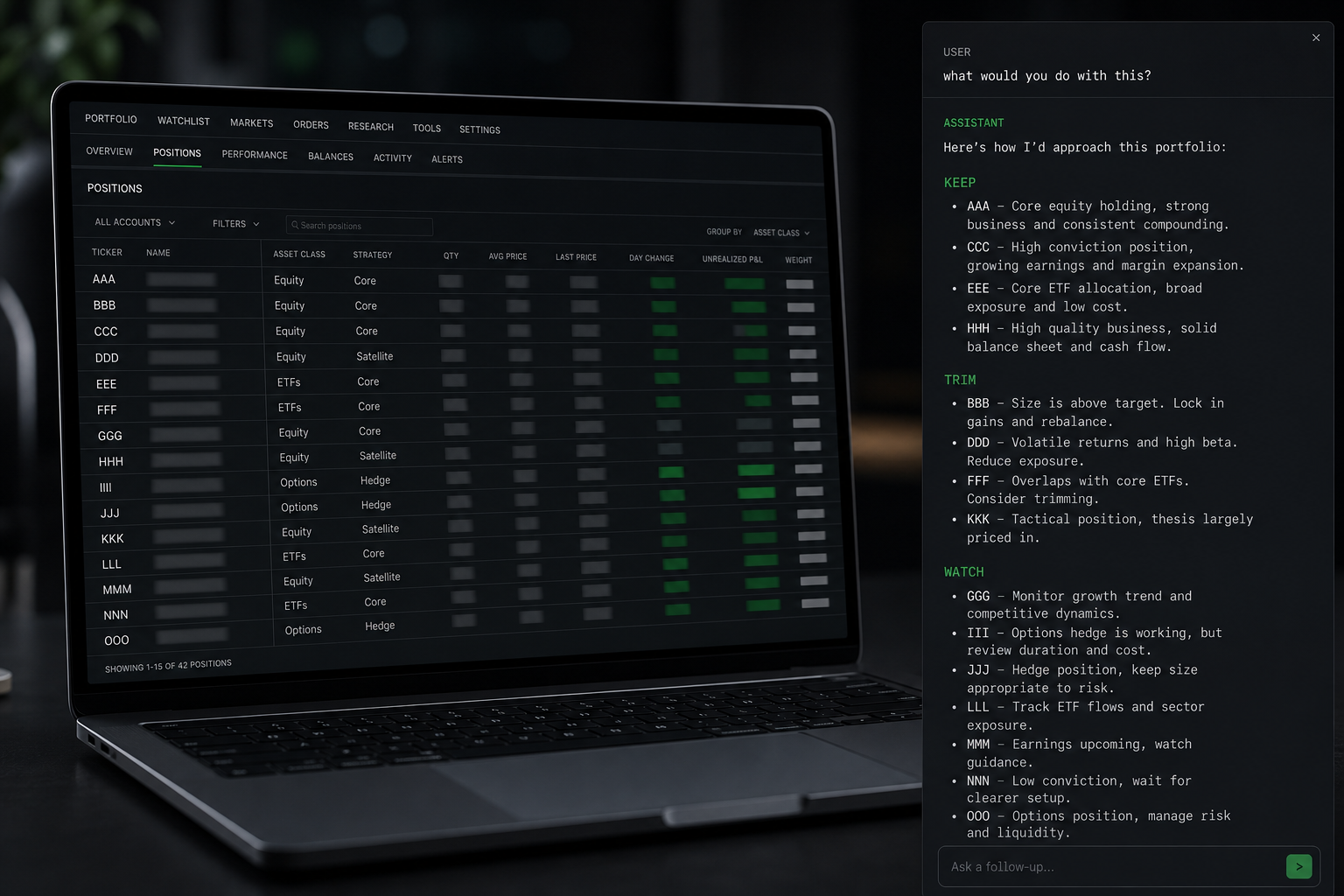
I do not let AI or software place trades for me. That is a hard line. The button is still mine.
What I do use Grok for is research — the unglamorous kind. Most mornings that matter, I export a positions snapshot from the brokerage, drop it into a Grok chat, and ask a plain question: what would you do with this? Sometimes the answer is “hold.” Sometimes it is “trim this, rotate into that.” I also tend to give it a few directives based on my trading goals, because I have different accounts and they are not all trying to win the same race.
For about a year I have kept that habit inside a Grok project I named Stock Portfolio. The personality note is short on purpose — aggressive growth mixed with dividend income, act like a stock advisor, look for picks that are not already on every screen. That is the whole brief. No secret sauce. No “set and forget.” Think of it as a sticky note on the fridge, not a hedge fund manifesto.
Here is how that setup has actually been useful — and where it cheerfully stops being useful.
1. The ritual is boring on purpose
The useful chats almost always start the same way. Boring is the point.
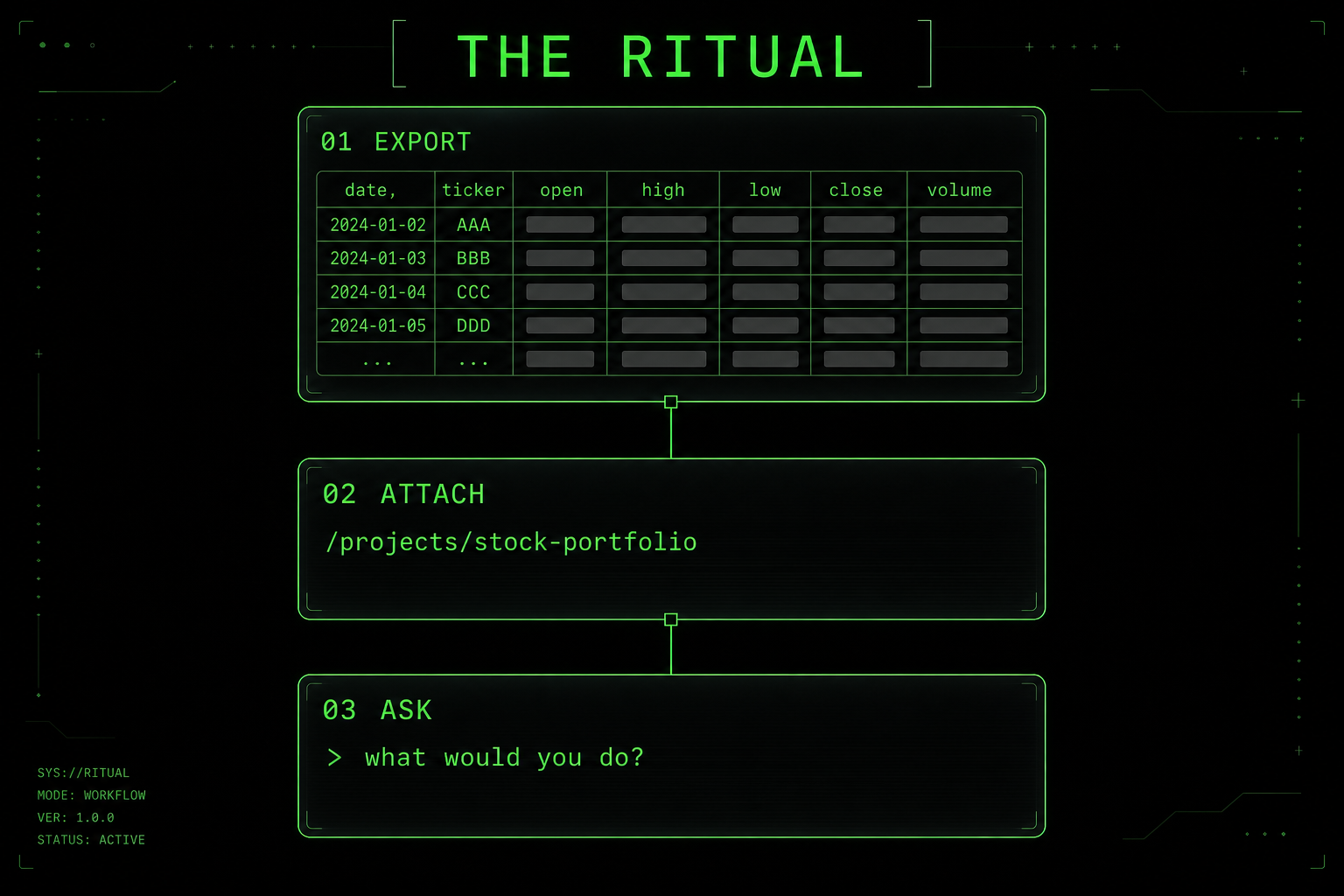
Export. Attach. Ask. Same three steps, on purpose.
- Export positions (CSV) or grab a screenshot.
- Attach it to the Stock Portfolio project.
- Ask something concrete: rebalance, hold vs sell, what to do with cash after a fill, where a trailing stop left me.
Grok is better when the question is narrow. “Look at this account” works. “Make me rich” gets you a pep talk and a shrug.
I use it across the usual buckets — retirement accounts, a taxable account, a solo brokerage — without dumping the whole life story into one thread. Different account, different tax reality, different question. The project remembers the style of advice I want. It does not (and should not) remember my passwords. Please keep it that way.
2. What I actually ask it
Over dozens of chats, the questions fall into a few buckets. Naming the buckets is more useful than naming every ticker I ever typed (and safer for everyone reading this).
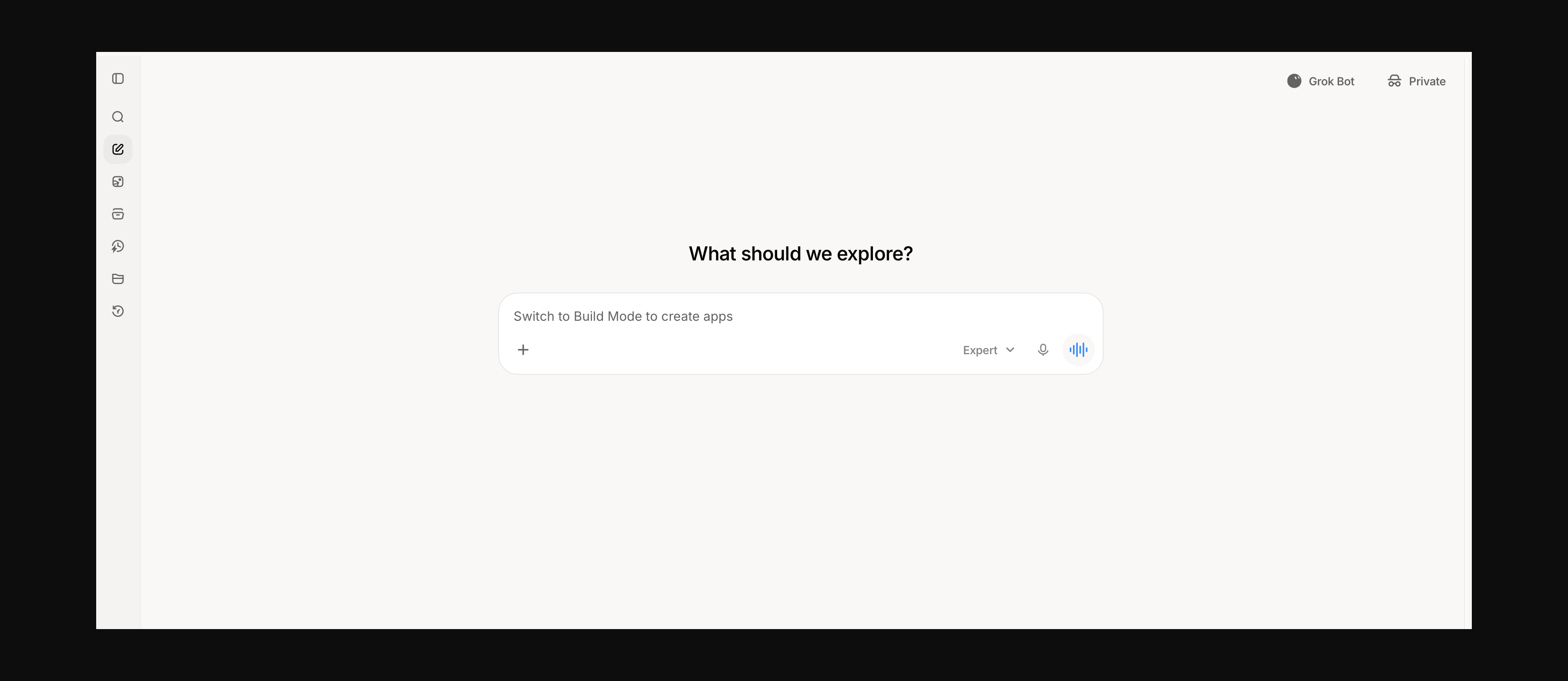
The actual Grok web UI I use. Sidebar collapsed here so nothing personal leaks into the shot. Expert mode. Private.
Rebalance. Something ran hot. Something sat there like a paperweight. Is the mix still what I meant, or did one theme quietly eat the account?
Trim and rotate. Move out of a theme that stopped earning its keep. Move toward growth, income, or both — without pretending every idea is a forever marriage.
Single-name second opinion. Hold or sell. Preferred notes vs common. A target after a stop already fired. One name, one decision, not a midnight manifesto.
Options as tools, not a personality. Covered calls that filled. A call I already sold — what now with the cash. Occasional “is this sell target sane?” questions. Still my finger on the order ticket. Grok does not get a cut.
Cash after a fill. A stop hit. A call assigned. Suddenly there is dry powder and a temptation to do something dumb with it. The useful ask is “where would you park this next,” not “guess the next meme before lunch.”
If that list sounds like homework, it kind of is. The point of Grok here is not adrenaline. It is a second pass before I do something I cannot easily undo.
3. What it is good at
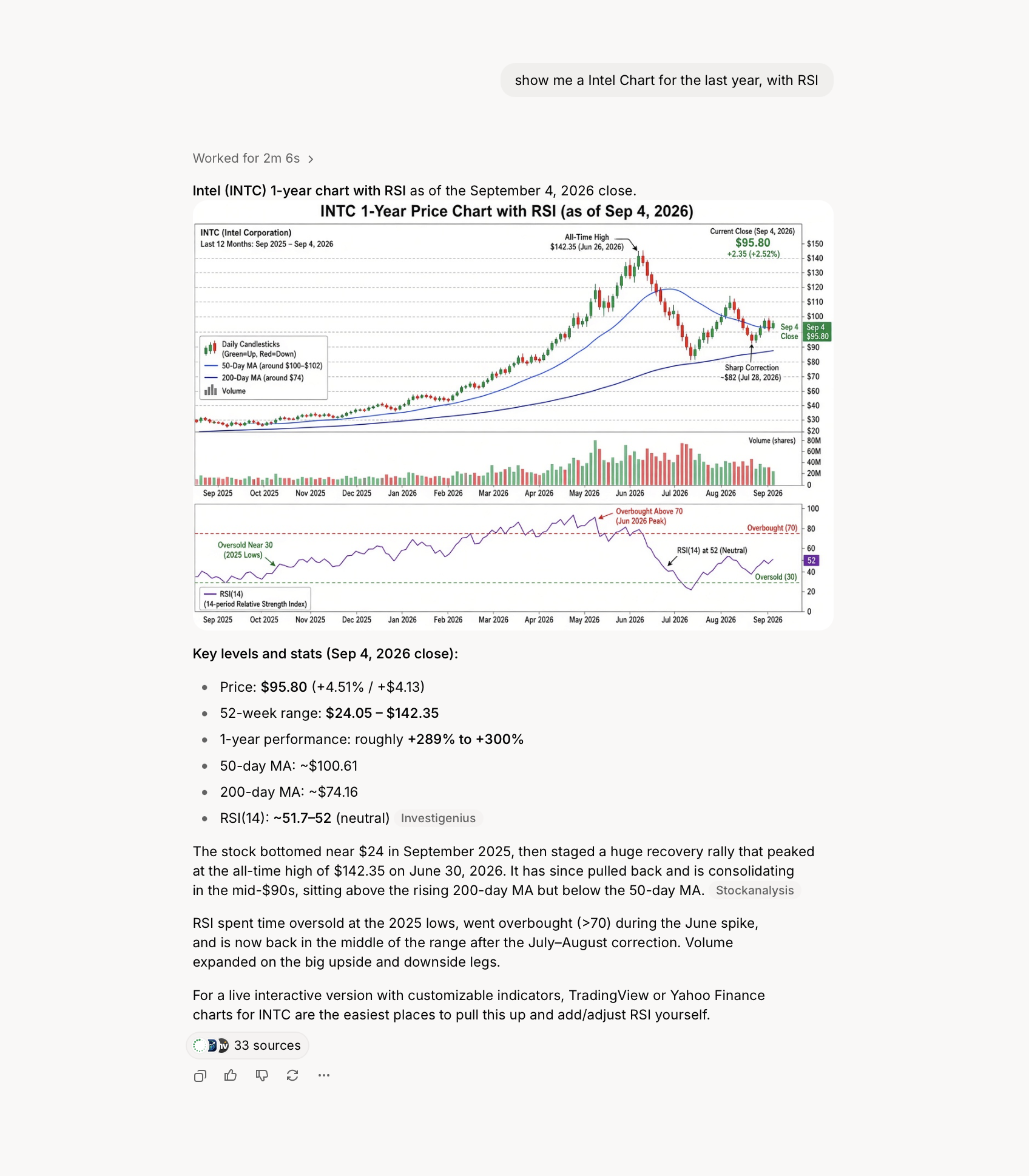
Not my book — just a public name. Ask for a chart with RSI and you get the picture plus a quick read. Still verify before you trade off it.
Plain English. I can paste a messy export and get a structured reply: keep, trim, avoid, watch. That alone is worth the habit — like having a patient friend who actually reads the spreadsheet.
It will argue with my bias if I let it. If I am married to a name because it was up yesterday, a cold read of the whole sheet is useful — even when I ignore half of it (which, yes, happens).
It is fast at “compare these two ways to express the same idea” — for example income from a preferred vs staying in the common — without me opening twelve tabs and forgetting why I opened the first one.
It is also good at not trading. Plenty of days the honest answer is leave it alone. That is a feature, not a bug. “Do nothing” is an underrated trade.
4. What it is bad at (listen carefully)
It does not know my full tax return, my sleep schedule, or whether I can stomach a drawdown this month without turning into a bad roommate.
It will sound confident when the tape is chaos. Confidence is not the same as being right. Chatbots have great posture.
It can overfit to whatever I just uploaded. If the CSV is wrong, stale, or missing cost basis, the advice inherits that mess. Garbage in, garbage out — with nicer formatting and a slightly too-friendly tone.
It does not place the trade. It does not see my live buying power unless I show it. It does not owe me a refill if a pick goes the wrong way. There is no customer service desk in the chat for that.
And it is not “the market.” Sacconews still runs ordinary charts and market notes for readers who just want the tape. This article is about a personal workflow: one person, one project, a lot of “what would you do?”
5. How to try the same idea without copying my book
You do not need my positions. You need a rule — and a little self-control.
- One Grok project for investing. Short personality. Growth, income, or both — pick a lane and stick to it for a while.
- Attach a fresh snapshot when you ask. Yesterday’s sheet is a different story with yesterday’s ending.
- Ask one decision at a time when money is moving. Decision fog is expensive.
- Write down what you actually did. The chat is not your blotter, and Grok will not remind your future self that you ignored it.
- Never paste account numbers, passwords, or anything you would not put on a postcard.
If you only do one thing: use it as a pre-trade checklist, not as a hotline for FOMO. FOMO already has enough friends.
6. The Sacconews angle
We already treat the Financial section as a place for Sacramento readers who watch markets without living on a trading floor — indexes, local-linked names, plain language.
Grok fits that same attitude when you use it this way. It is another tool for turning a wall of positions into a short list of decisions. The tool does not replace judgment. It sharpens the question — and occasionally talks you out of a cute idea.
I am not publishing my book. I am publishing the method: snapshot, ask, decide, own the click.
The method again: snapshot, ask, decide. You still own the order.
Not financial advice
Nothing here is a recommendation to buy, sell, or hold any security. Markets lose money for people who listen to chatbots, news sites, and their own cousins. Do your own research. Talk to a real advisor if you need one. Grok is a second set of eyes. You are still the trader — and still the one who has to live with the fill.
Comments
No comments yet. Be the first — comments appear after a quick review.
Leave a comment
Comments are reviewed before they appear publicly.