
Bitcoin sounds hard. Here’s the simple version — banks, credit cards, and how Bitcoin is different.
Digital money with no single company in charge.
1. How money usually moves online
You want to send $10 to a friend. Most of the time a middle company does the job:
- Bank transfer — your bank and their bank update balances.
- Credit / debit card — card network + banks approve the charge and move the debt/money later.
- Payment app — still a company holding the ledger for you.
That’s handy. It also means you trust them to keep score, not freeze you unfairly, and stay online.
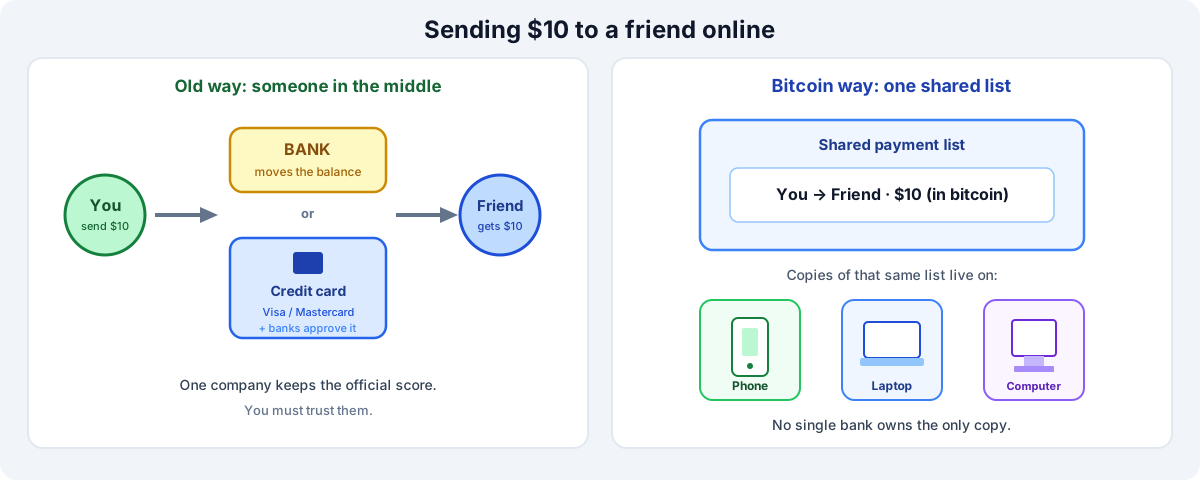
Left: a bank or credit card company sits in the middle. Right: one shared payment list, with matching copies on many devices (Bitcoin).
2. How Bitcoin actually works
When you send bitcoin, your wallet publishes a short message — basically, “I give this much to that address” — and seals it with a secret key so others can check it’s really you (you’re not emailing a coin file). Those payments get packed into pages of a shared notebook; each new page points to the last one, which is the “blockchain.” Special computers called miners race to solve a hard puzzle; the winner writes the next page and earns new bitcoin, which makes cheating costly. And the whole system has a hard limit: only about 21 million bitcoin will ever exist — nobody can print endless extras like a money printer. If you lose your secret keys, those coins are usually gone for good.
Bitcoin can also be split into tiny pieces. The smallest unit is a satoshi (or “sat”). There are 100,000,000 sats in 1 bitcoin — so you can send a fraction of a coin without needing a whole one.
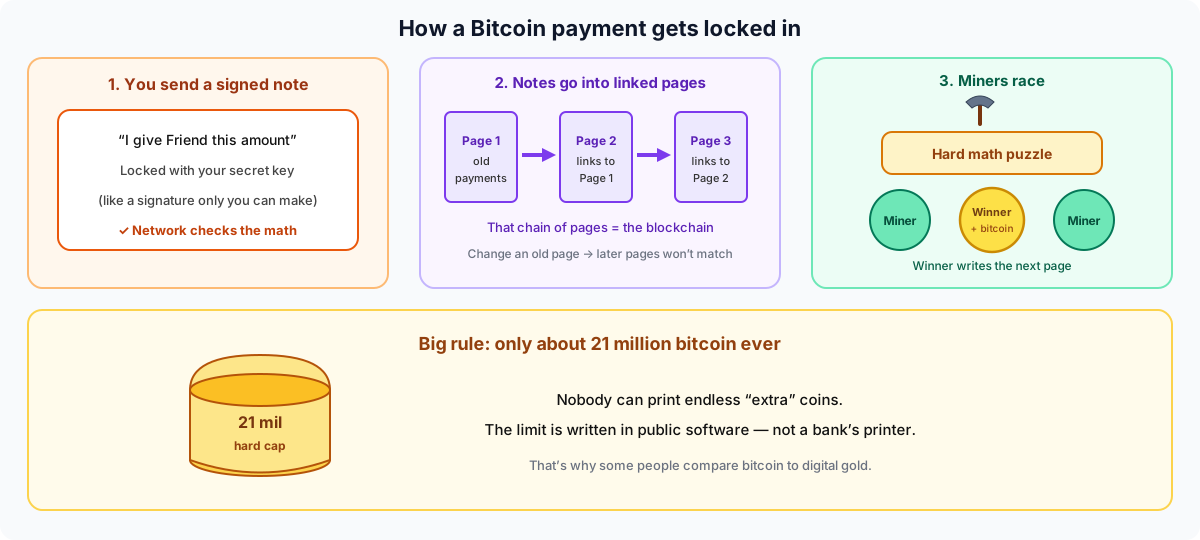
Sign a note → pack it into linked notebook pages → miners race to add the next page. Hard cap ≈ 21 million coins. 100,000,000 sats = 1 bitcoin.
3. Putting it together
With a bank or credit card, a company keeps the official score and can often reverse or freeze payments; with Bitcoin, a shared public notebook does that job, payments are hard to undo once confirmed, and the network runs 24/7 on the internet — but mistakes (wrong address, lost keys) are also hard to fix, and there’s no card fraud desk to call. People still care because the ~21 million supply is checkable in software, coins are portable with just a wallet and internet, you can hold the keys yourself (power and responsibility), and a large network makes trading easier — even though price swings hard and “number go up” is never guaranteed. In one line: banks and cards put a company in the middle; Bitcoin uses a shared notebook, signed messages, linked pages, and miners, with about 21 million coins max (and sats for tiny amounts — 100,000,000 sats = 1 bitcoin). For the original technical write-up, see Satoshi Nakamoto’s 2008 paper: PDF on SaccoNews · bitcoin.org. When you hear about any money system, ask: who keeps the score, who can change the rules, and who can say “no” to a payment?
Sources: Satoshi Nakamoto (2008). Diagrams: SaccoNews. Not financial advice.
Comments
No comments yet. Be the first — comments appear after a quick review.
Leave a comment
Comments are reviewed before they appear publicly.